Fiberglass (FRP) Sculpture: The Complete Manufacturing & Buyer's Guide
Fiberglass — technically fibre-reinforced plastic (FRP) — is the workhorse of large-scale custom sculpture. It is light, strong, weatherproof and can be molded into virtually any shape, which is why theme parks, shopping malls, landscape designers and brand owners choose it for everything from 6-metre cartoon mascots to abstract landmarks. This guide explains exactly how FRP sculptures are made, what they cost, how long they last, and how FRP compares with bronze, stainless steel, resin and marble — so you can brief a manufacturer with confidence.
What Is a Fiberglass (FRP) Sculpture?
An FRP sculpture is a hollow shell built from glass-fibre mat or cloth saturated with a thermosetting resin (usually unsaturated polyester or epoxy). The cured composite is rigid and impact-resistant yet weighs only about 1.5–2.0 g/cm³ — roughly a quarter the weight of steel and about 70% lighter than the same shape cast in bronze. Because the form is created in a mould rather than carved or cast in solid metal, designers have almost unlimited freedom of shape, and large pieces stay light enough to ship and install economically. For a primer on the material itself, see the overview of fibre-reinforced plastic.

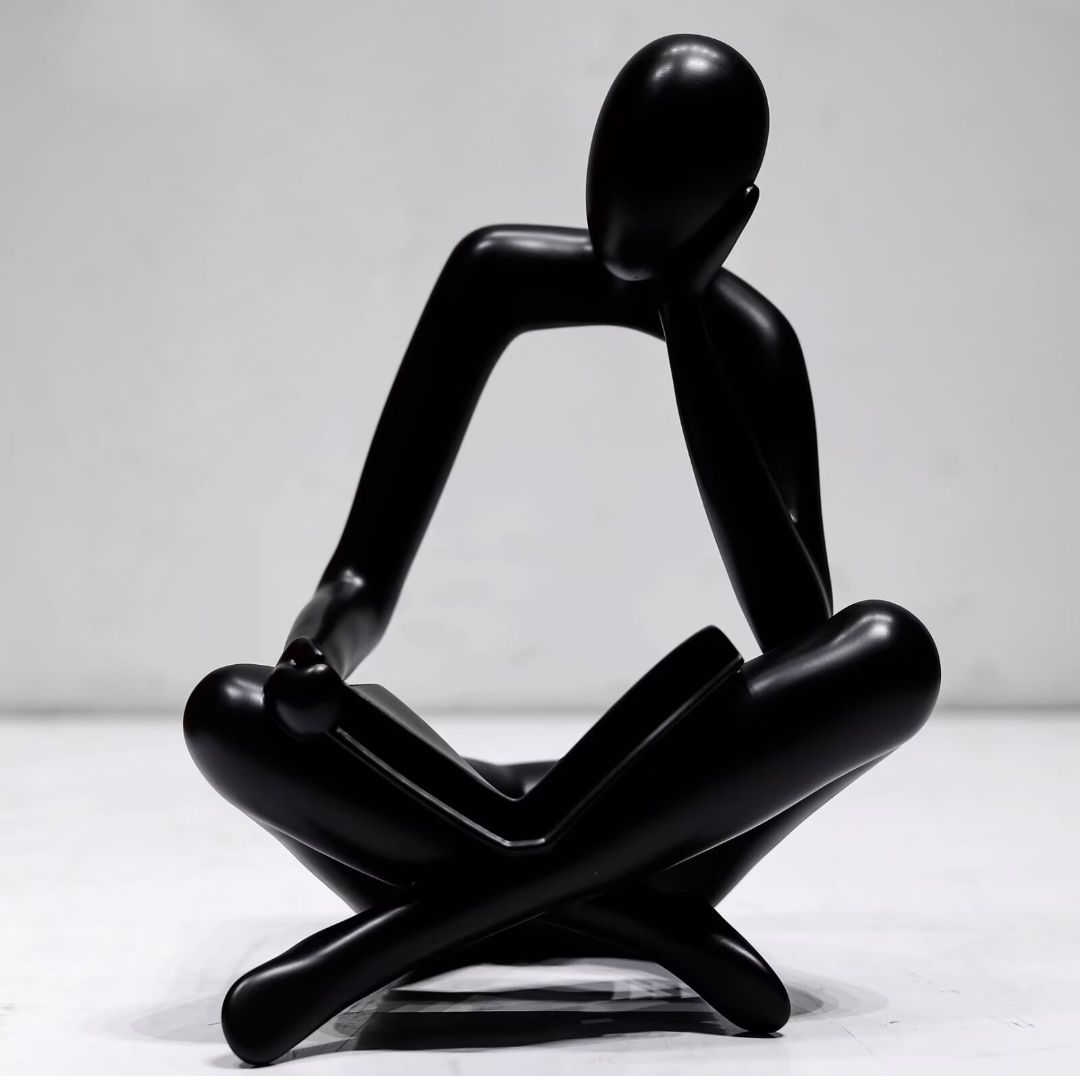
How Fiberglass Sculptures Are Made — Step by Step
Every reputable studio follows the same seven-stage workflow. The visual below summarises it; the detail follows.
1. Design & 3D modeling
Your sketch, photo or brand character is turned into a 3D digital model (ZBrush/Blender). You approve pose, proportion and scale before any physical work begins — the cheapest stage to make changes.
2. Master pattern
The approved model becomes a full-size master, hand-sculpted in clay over a steel armature, CNC-milled, or 3D-printed (SLA resolution ~25–100 microns; large forms are printed in sections and assembled). A complex life-size figure takes roughly 2–6 weeks at this stage.
3. Mold making
A silicone rubber mould (typically 8–12 mm thick, built up in 4–6 brushed coats) backed by an FRP support jacket is taken off the master. A good silicone mould yields about 15–25 pulls.
4. Gel coat
A pigmented gel coat is sprayed into the mould first. It forms the smooth outer skin and the first UV barrier, and is catalysed with ~1–2% MEKP initiator.
5. Fiberglass lay-up & cure
Glass mat/cloth and catalysed resin are laid in alternating layers (typically 3–5 plies) over the gel coat, with air rolled out for a void-free laminate. Finished wall thickness is usually 3–8 mm depending on size and load. The part cures at room temperature, usually ready to demould in 24–48 hours.
6. Demolding, trimming & sanding
The shell is released, seams are trimmed, and the surface is filled and sanded from coarse to fine grit. Large works receive an internal stainless or galvanised steel armature for structure and anchoring.
7. Surface finishing
Automotive-grade primer and topcoats deliver the final look: solid colours, pearlescent or colour-shift paint, faux bronze patina, faux stone, distressed/rust effects, or mirror-chrome. Outdoor pieces get a UV-protective clear coat.
Materials & Surface Finishes
The base laminate is either unsaturated polyester resin (economical, the default) or epoxy (higher strength, preferred for demanding outdoor work), reinforced with glass mat or woven roving. Decorative Class-A parts run roughly 15–40% glass by weight; structural sections can go higher. The finish is where FRP truly shines — a single shell can be made to look like polished bronze, weathered copper, cast stone or chromed metal at a fraction of the weight and cost. Mirror-metal looks are achieved either with vacuum-metallised/chrome paint or a chemical silvering process; the latter (the same family as decorative chrome plating) is more durable for exterior use.
FRP vs Bronze, Stainless Steel, Resin & Marble
There is no single “best” material — only the best fit for your budget, location and design. Use the table to shortlist, then talk to a fabricator about your specific piece.
| Material | Relative weight | Outdoor lifespan* | Relative cost | Maintenance | Best for |
|---|---|---|---|---|---|
| Fiberglass (FRP) | Lightest (~1.5–2.0 g/cm³) | 10–20 yrs | $ (most economical at scale) | Low — wash, recoat in time | Large/complex shapes, characters, theme parks, retail |
| Bronze | Heaviest (~8.7 g/cm³, solid cast) | Centuries | $$$$ | Wax 1–2×/yr | Monuments, figurative, heritage, permanence |
| Stainless steel | Heavy (hollow, ~7.9 g/cm³) | 50–100 yrs | $$$ | Very low — rinse | Modern reflective/abstract plaza pieces |
| Polyresin | Light | Indoor mainly | $$ | Low | Fine detail, small-to-medium decor, figurines |
| Marble / stone | Very heavy | Centuries | $$$$ | Periodic cleaning/sealing | Classical, carved, prestige interiors |
*Outdoor lifespan assumes correct specification and basic maintenance; figures are indicative ranges.
Durability, Weather Resistance & Lifespan
FRP does not rust or corrode and is inherently waterproof. With a quality gel coat and a UV clear coat, an outdoor FRP sculpture typically lasts 10–20 years, and premium materials plus periodic maintenance can push that beyond 20. Ageing is gradual rather than sudden: the topcoat softens and dulls first, reds fade earliest, and hairline cracks can appear at thin edges — all repairable. A dedicated UV topcoat can extend colour life by roughly a decade. The mechanical performance of glass-reinforced polyester is well documented in composite-materials standards such as ASTM D3841.
Common Sizes, Weight & Installation
| Size class | Typical height | Approx. weight | Install method |
|---|---|---|---|
| Tabletop / retail | 0.3–1 m | 3–20 kg | Free-standing / fixed base |
| Life-size | 1.5–2 m | 20–60 kg | Internal armature + anchor bolts |
| Large / landmark | 3–6 m | 80–250+ kg | Steel sub-frame, concrete footing, sectional assembly |
Large pieces are hollow with an internal steel armature and are usually shipped in sections with numbered assembly marks, then bolted to a prepared foundation on site.
Applications

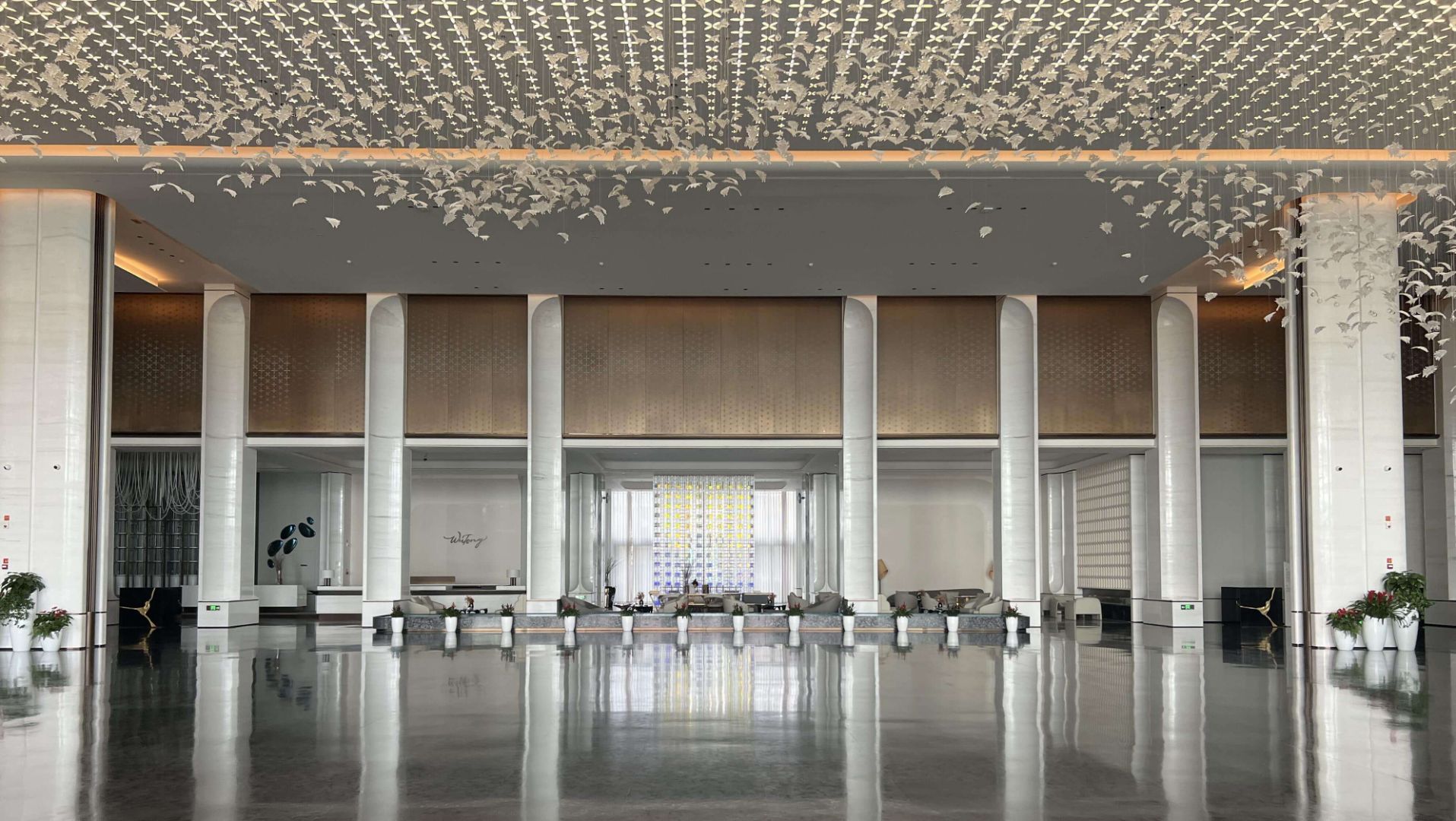
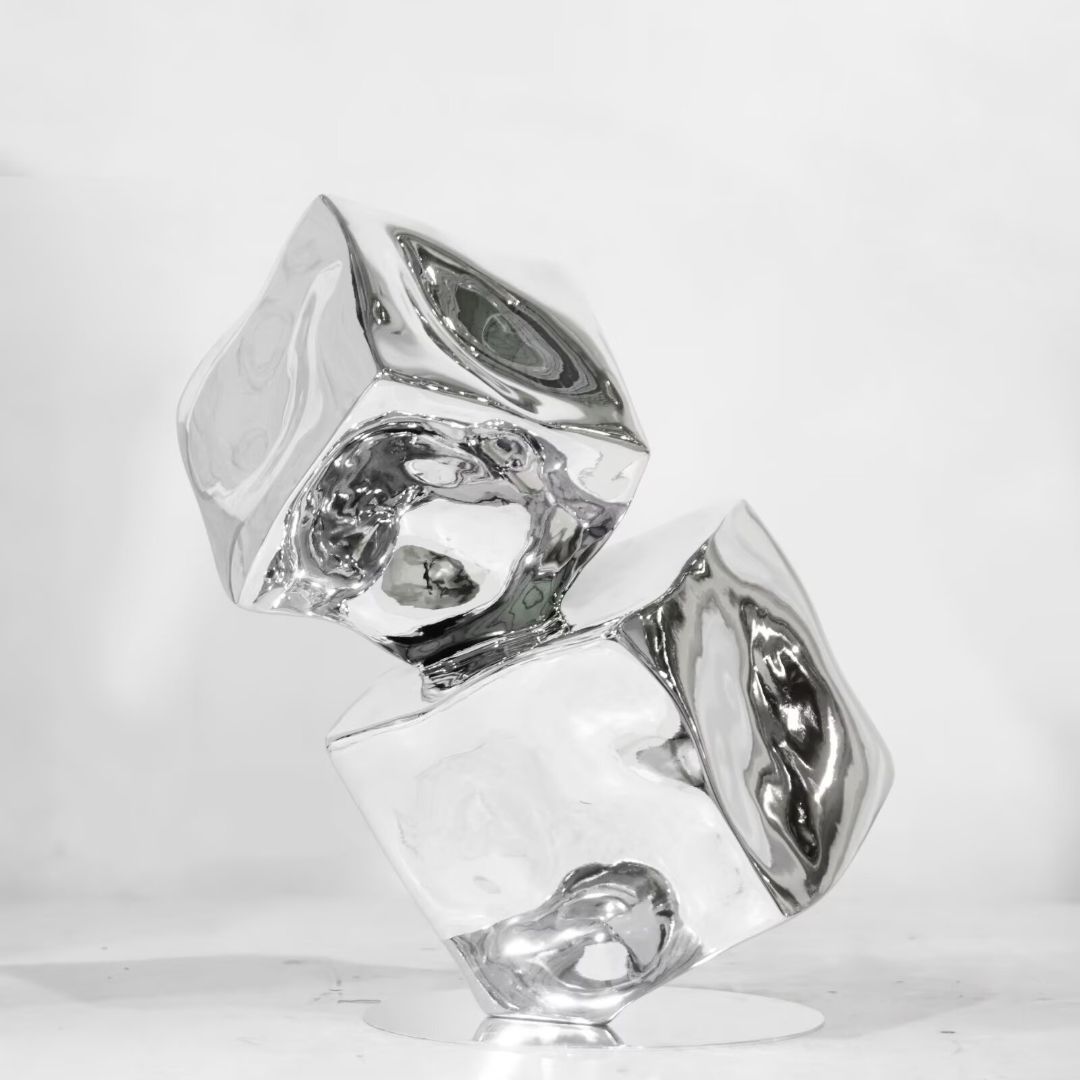
Typical uses: shopping-mall décor and seasonal installations, theme-park giant characters and scenery, landscape and garden sculpture, exhibitions, restaurants and retail visual merchandising.
Cost Factors & Lead Time
Two pieces of the same height can differ several-fold in price. The biggest drivers:
| Factor | Effect on price | Buyer tip |
|---|---|---|
| Size | Material + labour scale with volume | Confirm exact dimensions early |
| Design complexity | Multi-part / intricate poses add mould & finishing hours | Simplify non-visible detail |
| Surface finish | Solid paint cheapest; chrome / patina / automotive add cost | Match finish to viewing distance |
| Indoor vs outdoor | Outdoor needs UV coat + stronger armature | State the location up front |
| Quantity | Re-using the mould lowers unit cost on repeats | Order series together |
Indicative ranges: small (<1 m) ~US$200–800; medium (1–3 m) ~US$800–3,000; large (3–5 m) ~US$5,000–15,000+. Lead time runs about 2 weeks for small pieces, 1–2 months for medium/life-size, and 3–4 months for very large works — measured from approved design and deposit. Every project should be quoted on its own specification.
Maintenance & Care
FRP is low-maintenance: wash with mild soapy water, inspect every 2–3 years for chips or hairline cracks, and repair with colour-matched resin filler. Re-applying a UV clear coat every several years keeps outdoor colour vivid. No rust treatment is ever required.
How to Choose a Fiberglass Sculpture Manufacturer
Look for a real factory (not a trader) with in-house mould-making, structural-armature engineering and automotive-grade finishing; a delivered portfolio in your segment; export-grade crating; and clear pre-shipment QC photos/video. If you are weighing FRP against metal, our companion guide on stainless steel vs bronze sculpture covers the metal options, and our walkthrough of how to commission a custom sculpture explains lead times, payment and shipping.
Frequently Asked Questions
How long does a fiberglass sculpture last outdoors?
Is fiberglass or bronze better for outdoor statues?
How much does a custom fiberglass sculpture cost?
How long does it take to make one?
Can fiberglass look like real bronze or chrome?
Are large fiberglass sculptures hollow, and how are they installed?
Get a quote for your custom FRP sculpture
Send us a sketch, photo or 3D file and target size. We reply with a 3D concept and a transparent quote.
Request a Free Quote